You must download the Tor browser, establish a connection, and navigate to a dark website. Did you login to your eBay account to send a message about a parcel? The Surface Web underpins many modern conveniences, from online shopping to connecting with friends, and it serves as the primary gateway to information for billions of people worldwide. The “deep” web then, is all of the stuff connected to the internet but hidden away behind some form of security. The internet is the network infrastructure we use to communicate globally.
Here’s A Representation Of The Dark Internet Working Modus Operandi:
So you become a subject of interest by just using it, even if you browse the open web with it. These operating systems send every outgoing request, not just the web browsing ones, through the Tor protocol, ensuring robust protection. Besides, some additional protective measures may include application sandboxing, erase-on-shutdown, etc., based on a particular OS. In a nutshell, the deep web remains “open” to its respective owners and stays “closed” to others. And if someone tries to access the deep web without proper authorization, it would be termed as hacking, which is again illegal. As a deep web subsection, the dark web shares many characteristics.
Stay Up To Date With The Latest Cybersecurity News
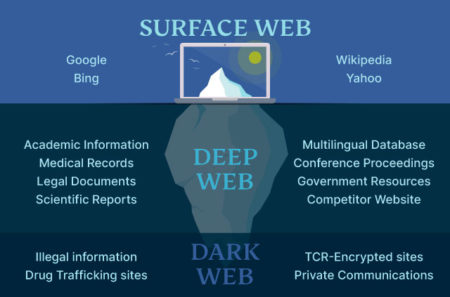
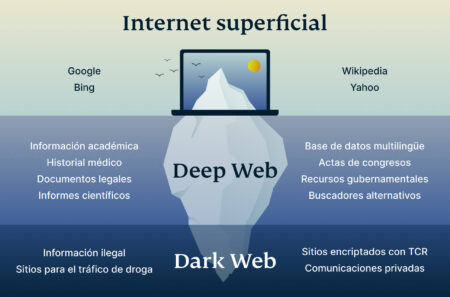
The Deep Web houses web pages that are designed for restricted use and are protected by registration portals, paywalls, etc. These Deep Web sites are not indexed by search engines, making them impossible to find via traditional search engines like Google, Bing, etc. The Deep Web, which includes sites accessible via normal browsers but not visible to search engines, makes up a much larger portion of the Internet. The Dark Web, which is only accessible via special web browsers, uses the same network infrastructure as the Surface and Deep Web but is completely distinct from it. What most people think of as the “Internet” or the world wide web is actually what is known as the Surface Web, or Clear Web.
Comparing Deep Web Vs Dark Web
But while it can support legitimate uses such as whistleblowing or journalistic sources, it’s also a hub for illegal activity. Criminals use it to buy and sell stolen data, commit identity theft, or conduct illicit transactions. The deep web is generally safe and secure to use; owners of private websites or services are responsible for maintaining their security. That said, cybercriminals increasingly target this part of the internet because of the lucrative personal data lying within.
Both in town and online, privacy is sought not only by upstanding citizens, but also by those looking to hide their not entirely legal activities. In the physical world, we think of shady business as taking place in slums and criminal dens — places selected for their lack of foot traffic and that are not marked on public maps. The addresses and whereabouts of each den are known to a limited circle of individuals, although many are aware that they exist somewhere.
Anonymity

Instead, it passes user data through a randomized link of encrypted servers called nodes. Interestingly, at the cusp of the new millennium by the US Naval Research Laboratory originally developed the Tor project. An early version of the Tor browser was created to combat the challenges presented by the lack of privacy during the initial days of the internet. Its main goal was to prevent spy communications from being discovered; however, the framework was eventually repurposed and made public. The terms dark web and deep web are perceived to be linked with illegal and otherwise suspicious activity; however, a vast difference exists between the two. If the surface web is the visible part of an iceberg above water, the deep web is the part submerged beneath – much larger but hidden from plain view.
Table Of Contents
Moreover, the deep web is not completely hidden and is a part of WWW (World Wide Web), whereas the dark web is completely hidden and cannot be accessed by any normal search engines. As an Internet consumer, you get all the relevant information whatever you search and there are almost unlimited resources available which are just 4% of the entire net. For this reason, all the access data must be indexed through any search engine. Now let’s understand the basics of the Indexed web for better clarity.
Web Hosting Company Increases Security Team Bandwidth With Up To 80% Decrease In Threat Research Times
- It’s the language of the internet and describes exactly how information is encoded and routed over the internet.
- However, noteworthy differences exist in operation, scope, size, access methodology, applications, and security.
- One of the key tools used on the Dark Web today was first released in 2002 – Tor, The Onion Router.
- This could be because the pages are not indexed, meaning they can’t be found by searching for them on search engines, they are paywalled websites or private databases.
Search engines like Google can’t access the Deep Web and Dark Web simply because their content is not indexed. This lack of indexing of its content makes these layers of the internet less easily accessible and harder to navigate than the Surface Web. On the other hand, the dark web relies on anonymity and encryption to function.
What Are Examples Of Deep Web Resources?
Subscription-based applications can be accessed only once the user has paid for them. The paywall prevents search engine crawlers from accessing this content. Examples include software as a service (SaaS) solutions, paid news websites, and streaming services.
The Deep Web’s design prioritizes privacy, inherently limiting accessibility. Content remains invisible to search engines, requiring users to possess specific credentials or URLs. Most deep web resources serve legitimate purposes and exist to protect confidential information rather than conceal illegal activities.
Let’s think of the Internet as an enormous, unseen mountain range. The part we can see and interact with on an everyday basis is merely the tip of this colossal virtual expanse; much of it remains concealed from plain sight. These hidden parts are often referred to as the Hidden Web and the Obscure Web – two parts of the internet that are wrongly assumed to be similar. This essay provides a disambiguation between these two entities, giving a clearer view of this concealed cyber terrain. Consider the concept of cyberspace as an iceberg floating in the arctic sea, where our usual interactions occur on the visible apex. Beneath this observable section, however, lies a labyrinth of clandestine web pages and online resources – the uncharted territories of the cyber sphere often referred to as the Deep and Dark Internet.
Eugene Personal Blog
It’s run by global volunteers who become relay operators by donating their bandwidth and IP address for whatever Tor users do. Dark web hosts project which ends with .onion (aka onion sites) and not .com, .net, .org, etc. that we generally operate with. And since normal browsers can’t browse such websites, you need something like the Tor browser to surf the dark web.
The Hidden Web, also known as the Obscure Web, skirts the regular detection of mainstream search engines like Bing or Google. Internal pages of protected sites, encrypted networks, and secret databases stay unseen within this web’s vastness. Surface web is that part of the Internet that has information related to sites that have been indexed by search engines. This part of the internet is accessible by search engines like Google, Bing etc. Generally, when we search for anything, we get thousands of articles, videos, and images, which gives us the impression that the surface web is massive. However, there are estimates that this could be just 4-5 % (even less by some estimates) of the entire web.
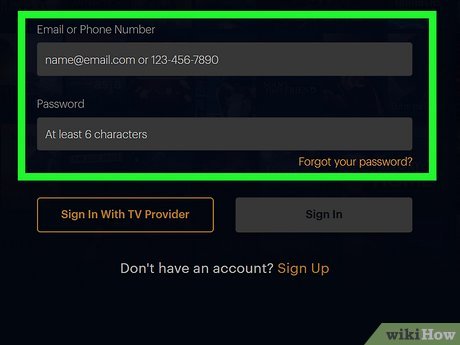
Accessing the deep web is simple, and you likely use it daily when logging into private accounts like Gmail, your bank account, or even streaming services like Netflix or Disney+. Phishing is when someone contacts you pretending to be someone else to gain access to your personal information, which often results in identity theft. Finally, deep web also refers to all content to which no links exist from the visible or surface web. A search bot simply does not know that such content exists; it finds new pages by following links from the pages it’s already indexed. Just as a Google Street View car cannot get into a private courtyard, search bots cannot come across unlinked content.