Intravenous (IV) injections lead the administration route segment with 48.3%, favored for their rapid and efficient drug delivery. The convergence of these innovations—complex products, advanced manufacturing, and digital commercial models—is creating a profound divergence within the generic drug industry. Companies that possess the capital, expertise, and strategic foresight to invest in these new capabilities will be able to create a sustainable competitive advantage based on value, quality, and efficiency.
Global Prescription Drugs Market
Germany’s emphasis on innovation, biosimilar adoption, and health insurance reimbursement policies has fostered a competitive and high-value prescription drugs environment. Furthermore, increased government focus on improving healthcare efficiency and sustainability continues to support the growth of prescription drug utilization across hospitals and specialty care settings. This has led major pharmaceutical companies to be constantly engaged in clinical trials for the development and, ultimately, the approvals of new products. An increasing number of key manufacturers are shifting their focus toward developing drugs to treat rare diseases.
Orally administered pharmaceuticals account for about 84 percent of the top-selling pharmaceuticals. Among the new drugs recently approved and predicted to have a considerable impact for many, is Vertex Pharmaceuticals’ new oral non-opioid painkiller Journavx (suzetrigine). Eighty million Americans annually receive prescriptions for acute pain, but many painkillers cause unwanted side effects, with the potential addictiveness of opioid-based medications arguably the most devastating, as evidenced by the worldwide opioid crisis. Journavx, a sodium-channel inhibitor that blocks pain signals, is effective but non-addictive, and is the first new class of pain medication approved by the US Food and Drug Administration (FDA) in over 20 years. Sales are forecast to reach $2.9 billion by 2030—a potential blockbuster for Vertex as well as a safer alternative to opioids for those managing acute pain. The FDA publishes a list of approved new drug application (NDA) products that lost patent protection or exclusivity without an approved abbreviated new drug application (ANDA).
What Is Covered Under Drugs For Hormonal Replacement Therapy Market?
- Access our exclusive, data-rich dashboard dedicated to the healthcare market – built specifically for decision-makers, strategists, and industry leaders.
- This is despite regulatory efforts to curb methamphetamine’s production and distribution, which seemed to disrupt the market in the short term but may have spurred innovation in meth production.
- Its robust delivery of medication into the bloodstream and reliability are driving the growth of this segment in the drugs market.
- Their flexibility in dosing and compatibility with a broad range of injectable drugs further enhances their appeal.
- Over time, multiple manufacturers may enter the market with generic versions of the same drug, leading to a crowded and highly saturated market.
Investments in these regions aregrowing as pharmaceutical companies look to tap into new markets with risinghealthcare demands, especially for chronic disease treatments. Multinational pharma companies are also investing in localmanufacturing plants to lower production costs and comply with regionalregulations, ensuring better access to medicines in these high-potentialmarkets. Key drivers of the OTC segment include rising consumer awareness of preventive healthcare, an increasing shift toward self-medication, and the expanding availability of OTC options due to Rx-to-OTC switches. Regulatory approvals for transitioning prescription drugs to OTC status, such as in allergy and heartburn treatments, have bolstered market growth by making proven therapies more accessible. Additionally, the growth of e-commerce platforms has transformed the distribution landscape, enabling consumers to easily purchase OTC products. The segment benefits from robust demand driven by a growing focus on wellness, aging demographics requiring easy-to-use medications, and widespread marketing efforts that enhance product visibility.
Pharmaceutical Market Report Scope
Across the world, there is a major growth in chronic diseases like cardiovascular issues, diabetes, obesity, and cancer, which are driving the growth of the drugs market. Further, the growing awareness about health and hygiene, along with increasing capital, is impacting demand for superior hospitals, drugs, and pharmacy offerings. Nowadays, the globe is stepping into various innovations and exclusivity, stemming from significant R&D investment and the ability to charge premium costs for patented medicines, especially in areas like chronic diseases and cancer.
A Global Overdose Crisis In The Making?
What started out as a traditional heroin market with occasional fentanyl appearances, grew to a widespread availability through the contamination of street heroin with imported fentanyl. This later shifted towards locally produced fentanyl due to several factors, including its economic advantages and a crack-down on fentanyl in China 7. Indeed, in 2019, China started controlling fentanyl by criminalising its production and export, which undoubtedly further pressured an already growing local production of fentanyl 8.
Pharmaceutical Processing Seals Global Market Report 2025
The specificity and efficacy of these biologics foster expanding clinical indications and increasing physician preference. With rising global health challenges and continuous technological advancements, the injectable drug market is poised for sustained growth and evolution through 2035. In terms of distribution channel, the market is segmented into retail pharmacies, hospital pharmacies & drug stores, and online pharmacies. The technological disruption extends beyond the lab and factory floor to the commercial landscape itself. The rise of digital platforms is changing how generic drugs are distributed and accessed, creating new pressures and opportunities.
What Is Covered Under Pharmaceutical Packaging Equipment Market?
This significant growth trajectory is driven by the rising healthcare demands, advancements in drug development, and increasing investments in biopharmaceutical research worldwide, positioning the market for robust expansion over the forecast period. During the prospective period, the Asia Pacific is estimated to register the fastest growth in the market. China and India are experiencing a rise in the geriatric population, who are linked with severe and chronic issues, such as cancers, diabetes, and rare genetic disorders. Besides this, emerging countries are widely adopting cost-effective generic drugs, as well as government support and policies are encouraging the overall market developments. China is stepping into the transformation of cutting-edge drug modalities, including antibody-drug conjugates (ADCs), cell therapies and gene therapies, and bispecific antibodies.

The India Drugs Market Trends
Pharmaceutical R&D spending in the U.S. has been a pivotal driver of market growth, with the sector continuously investing in the discovery and development of new therapies. In 2023, pharmaceutical companies in the U.S. spent over USD 80 billion on R&D, a figure that continues to rise annually. A global reference on drug markets, trends and policy developments, the World Drug Report offers a wealth of data and analysis and in 2024 comprises several elements tailored to different audiences.

Because OTC medications have low toxicity, the FDA has concluded that the advantages of using them exceed any potential risks or adverse effects. They must be approved by the Food and Drug Administration (FDA) and go through rigorous clinical testing. To recoup their high development expenses, pharmaceutical corporations usually keep a patent for 20 years. Businesses that find, develop, produce, distribute, and sell pharmaceutical goods are referred to as pharmaceutical industries. One of the most tightly regulated industries, the pharmaceutical industry has consistently produced high-quality pharmaceutical goods for human use that have the intended pharmacotherapeutic effects for the treatment of a wide range of illnesses. A key driver behind the dominance of biologics is the ongoing innovation in biotechnology, enabling the development of next-generation biologics like monoclonal antibodies, fusion proteins, and cell and gene therapies.
This integration allows pharmaceutical firms to collect real-time health data, personalize treatment regimens, and streamline supply chains to respond more effectively to patient needs. The escalating incidence of chronic illnesses such as diabetes, cardiovascular disorders, cancer, and respiratory diseases is significantly driving the demand within the global pharmaceutical market. As populations age and lifestyle factors like sedentary habits, unhealthy diets, and increased stress become more common, the burden of these long-term health conditions intensifies, necessitating sustained and advanced therapeutic interventions. In parallel, the persistent threat of infectious diseases, including emerging viral outbreaks and antibiotic-resistant infections, underscores the critical need for innovative vaccines, antimicrobial agents, and treatment solutions.
- The IQVIA Innovation Hub connects start-ups with the extensive IQVIA network of assets, resources, clients, and partners.
- Patient advocacy groups have become powerful and influential stakeholders in the healthcare ecosystem.
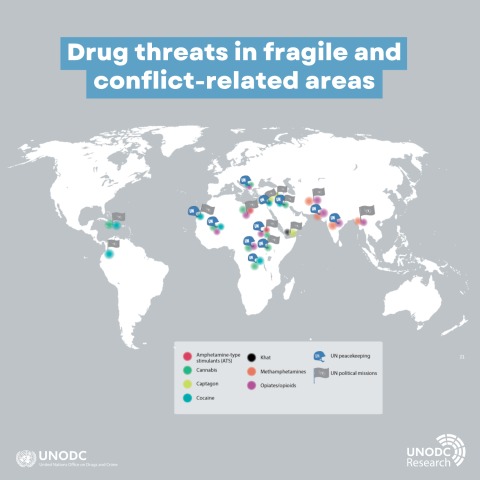
- This is followed by a chapter examining the convergence of drug trafficking and other activities and how they affect natural ecosystems and communities in the Golden Triangle in South-East Asia.
- Thus, off-patent, off-exclusivity drugs play a crucial role in the generic drugs market by promoting competition, affordability, and treatment access.
Hospital pharmacies hold the largest distribution share, with growing adoption of retail pharmacies improving patient access to medications. The region benefits from strong regulatory frameworks, government funding for biopharma research, and increased adoption of biosimilars and orphan drugs. Market growth is driven by the rising prevalence of chronic diseases, aging populations, and expanding access to healthcare. Hospital pharmacies hold the largest distribution share, while retail pharmacies are seeing gradual growth in chronic disease management.
The rising global burden of cancer and autoimmune diseases, along with increased diagnostic capabilities, are key drivers underpinning the monoclonal antibody segment’s leadership in the injectable drug market through 2035. The presence of a robust product portfolio and diverse distribution network of these players across key applications such as immunology, oncology, and vaccines propel their company share in the market. Many European countries utilize tendering systems to procure generic drugs, particularly for the hospital sector. Furthermore, collaborations between pharmaceutical companies and research institutions have accelerated the development of novel oncology drugs. Lastly, favorable regulatory pathways & expedited approvals for breakthrough cancer therapies have further propelled the growth of this segment, solidifying its dominance in the U.S. The FDA plays a critical role in ensuring the safety and efficacy of drugs, with expedited pathways such as Breakthrough Therapy Designation and Accelerated Approval supporting innovation for high-need conditions.
Gene therapies and RNA-based treatments, like those for inherited retinal diseases and certain types of cancers, have gained FDA approvals, contributing to the industry’s momentum. The approval of cutting-edge drugs such as CAR-T cell therapies for certain cancers exemplifies the market’s growing focus on precision medicine, offering hope for previously untreatable conditions. A notable advancement is the continued progression in immuno-oncology treatments, which are redefining cancer care.