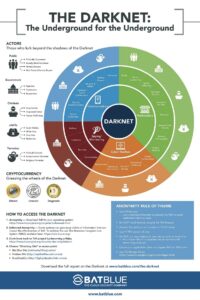
You risk being targeted for attacks if you explore the dark web without protection. The threat can extend to your entire network of devices connected to the internet. The US Naval Research Laboratory developed The Onion Routing (Tor) project in the late 90s. A network browser gives you access to sites with the ‘.onion’ registry operator. One option is to try DuckDuckGo’s .onion version, which is great for privacy. Other options include Ahmia and NotEvil, which focus on listing .onion links.
The dark web is the part of the internet that’s not indexed by public search engines like Google. It’s made up of forums, marketplaces, and websites you can’t find with a Google search and requires specialized software to access, such as the Tor Browser. Despite the dark web’s anonymity, users still need tools to navigate its vast and often confusing landscape. Several dark web search engines have been developed to index and provide access to hidden services. Examples include Ahmia, which filters out illegal content and offers a safer search experience, and Torch, known for its extensive index of dark web sites. By definition, the dark web is the home to the darker corners of the internet.
What Is The Safest Way To Access The Dark Web?
Tor Over VPN is when you first connect your computer or mobile device to your VPN service and then use the Tor Browser to travel the internet. If you are reading this, you’ve likely heard about how the Tor Browser can help protect your internet privacy and anonymity online. In recent years, it has become one of the internet’s most talked-about topics. From secret hacker forums to marketplaces like Abacus Market, curiosity and concern surround this hidden part of the web.
Hackers spend a lot of time on the dark web, and it’s not too difficult to get access to hacking tools and data leaks in this part of the internet. However, it’s much harder to get at the people who are doing the uploading and downloading. Even with Tor and onion routing in place though, you’re not suddenly completely invisible and free to do whatever you want, without repercussions. Certain details of your traffic can be intercepted at the entry and exit points of the node, by the people running those nodes, if they know what they’re doing and what they’re looking for. You’re also open to threats like end-to-end correlation attacks, so while Tor is a lot more secure and private, it’s by no means completely safe. However, there are plenty of legal and legitimate online activities that require privacy and anonymity.
It’s very important to make sure you are on the correct website when using Tails, as there may be malicious websites with similar addresses. To ensure maximum privacy, users should set their security level to “safest” and disable JavaScript. Users should also update their Tails operating system and Tor browser regularly to avoid security vulnerabilities. Dark web encryption allows website owners and users to stay completely anonymous during their engagement. As the digital environment evolves, so do the tactics employed by cybercriminals, law enforcement agencies, and privacy advocates. Staying safe and anonymous often means continuously educating yourself, adapting your methods, and refining your tools.
Keep Tor Browser Updated
To get on the dark web, you need a browser built for the job, and the best in the business is Tor. Tor is a browser engineered for extra security and privacy, and can be used to navigate the normal, surface web as well as the dark web. It blocks trackers, prevents user fingerprinting, encrypts data, and reroutes your browsing so no one can see where in the world you are. If your phone number is on the dark web or you suspect it is, you should set a security PIN with your cellular network, monitor for suspicious activity, and stay alert for scam messages or calls. This is the standard internet you use daily on your phone, computer, smart TV, and IoT devices.
What You Need To Securely Browse The Dark Web
Unlike regular search engines such as Google, Yahoo, Bing, DuckDuckGo does not store your data, ensuring complete anonymity. The dark web, which is what I’m discussing here, is a small subset of the deep web, and refers to websites that are specifically trying to stay out of sight. What used to be confined to shadowy corners now overlaps with mainstream platforms, and the line between privacy and crime continues to blur. People use the dark web for both good and bad, but generally speaking, it’s used for activities requiring a high level of anonymity.
Privacy And Data Tracking
This disables potentially dangerous features like JavaScript that could reveal your identity. NoScript and HTTPS Everywhere extensions provide additional protection against malicious scripts and unsecured connections. Many scam sites use URLs nearly identical to legitimate services. I always cross-reference links from multiple verified sources before visiting any dark web address.
Step 5: Find Verified Onion Links
It’s been a constant back-and-forth between cybercriminals and law enforcement, with each new site trying to be smarter and more secure than the last. In 2019, there were approximately 8,400 active sites on the dark web, selling thousands of products and services daily. The second category consists of data stores, which specialize in stolen information. This is why millions of people are using VPNs while watching porn instead. Because you download your VPN once, and it checks all the boxes above (and more) every time without fail, without needing your manual input. Porn sites get hacked constantly, and when they do, everything gets exposed.

Other dark web search engines include Not Evil, Torch, Haystack, and Ahmia. The deep web is made up of content that search engines such as Google do not index. Such data includes medical records, financial information, research papers, private forums and networks, and other content.
It’s a precaution to protect yourself before diving into the dark web. For recommendations on choosing a VPN, look for expert reviews and articles. Navigating the dark web requires extra layers of privacy, not just because of its content but due to legal scrutiny. The US Supreme Court has indicated that even casual browsing could lead to legal consequences. The Dark Web is a hidden part of the internet, completely different from the clear web we all use daily.
What Is The Dark Web & How To Stay Safe
A specialized search tool for researchers focusing on darknet marketplaces (use with extreme caution). Consider using a separate laptop or virtual machine solely for dark web access to reduce the risk of malware infection on your primary system. If you’re extremely cautious, booting from a privacy-centric OS like Tails or Whonix can enhance security further. Before even opening Tor, it is strongly advised to connect through a reputable VPN service to add an additional layer of IP masking and prevent ISP tracking.
- In this guide, we’ll cover the dark web access guide, explain how to use Tor browser safely, and answer key questions like is it safe to browse the dark web.
- Ask any tech question at facebook.com/DataDoctors or on X @TheDataDoc.
- By proactively employing these detailed, actionable security measures, you can confidently mitigate risks and safely utilize the dark web while preserving your privacy and anonymity in 2025.
- However, there is an easy-to-use way around that, which we’ll talk about later.
- Furthermore, it’s critical to understand that Whonix is not a stand-alone browser.
- Have you noticed how all the URLs that used to start with “http” changed to “https” over the last several years?
- When using dark web search engines, it’s important to exercise caution and refrain from clicking on suspicious links or accessing illegal content.
- Various cryptocurrencies such as Bitcoin and Monero can be used to make purchases.
- Malicious software, such as malware, affects users on the Dark Web in a similar manner as it does on the rest of the internet.
- This means you have to know someone who is already using the platform.
Yes, Tor-capable browsers are available for both major mobile platforms, Android and iOS. If you find that Tor is restricted in your current location, you can use a bridge. A bridge creates an obfuscated relay on the Tor network that is not listed in the main directory. That means that even if an ISP is monitoring all of the known Tor relays, they may not be able to block all of the obfuscated bridges.

This may be welcome news to those in states where security services have attempted to block ‘anonymous’ email websites like these from the open web. Since Tor can be used to access websites governments try to block, the dark web can be a useful tool for people living under dictatorships to access western media. It’s a part of the internet that’s less regulated and more shadowy, for better and for worse. Because Google and Bing don’t index onion sites, you’ll need dedicated search engines to navigate the dark web. A few well-known ones make finding content easier, though quality and safety can vary. Your safety on the dark web depends more on cautious browsing habits than any single security tool.
It encompasses public domains such as websites, social media platforms, news sites, and online stores—content accessible to anyone with the help of the internet and a web browser. When you first access the dark web, one of the biggest challenges is knowing which sites are safe to visit. Since many links can lead to scams, malware, or illegal content, trusted directories and marketplaces play an important role in helping users avoid dangerous traps. No, simply accessing the dark web isn’t illegal in most countries.